Welcome to my astrophotography journey. The further you scroll, the further back in time you go — start with my latest images and journey down to my first steps under the night sky. Along the way, each photo captures a moment in my learning and exploration, and if you’d like to know the story behind them, you can find the full journey in the About Me section.

🌌 Helix Nebula - Seestar S50 (from Tokyo)
🌌 Helix Nebula - Seestar S50 (from Tokyo)

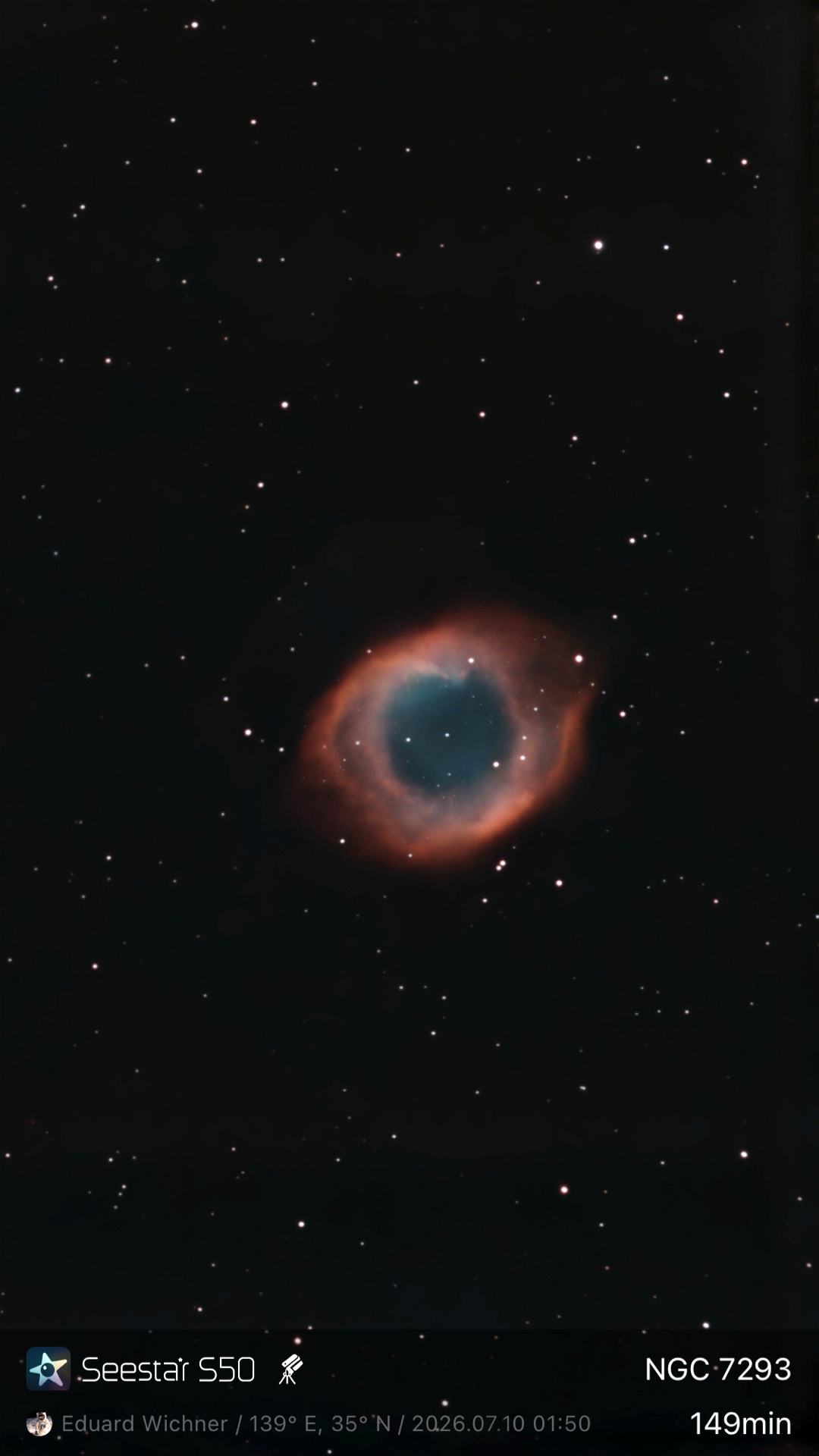
The Helix Nebula (NGC 7293), captured with the Seestar S50 from the heart of Tokyo — one of the most light-polluted cities on Earth. Often called the "Eye of God," this planetary nebula lies about 650 light-years away in Aquarius, formed by a dying Sun-like star shedding its outer layers into space. Despite the challenging urban skies, the Seestar's compact design and built-in filtering made it possible to pull this cosmic "eye" out from the city glow — proof that astrophotography doesn't always require dark, remote skies.

Imaging Details
Telescope/Lens: ZWO Seestar S50 (triplet apochromatic refractor 50/250 f/5)
Camera: Sony IMX462 (ZWO ASI462MC)
Filters: LPS / IR cut
Total Exposure: 149 min
Subs: 298x30s
Processing Software: Photoshop
Location: Tokyo, Sumida Park
Bortle Scale: 9
Astrometry: RA 337.445791 · Dec -20.831079 · FOV 1.45°
15 views
M16 — The Eagle Nebula & Pillars of Creation

M16 — The Eagle Nebula & Pillars of Creation

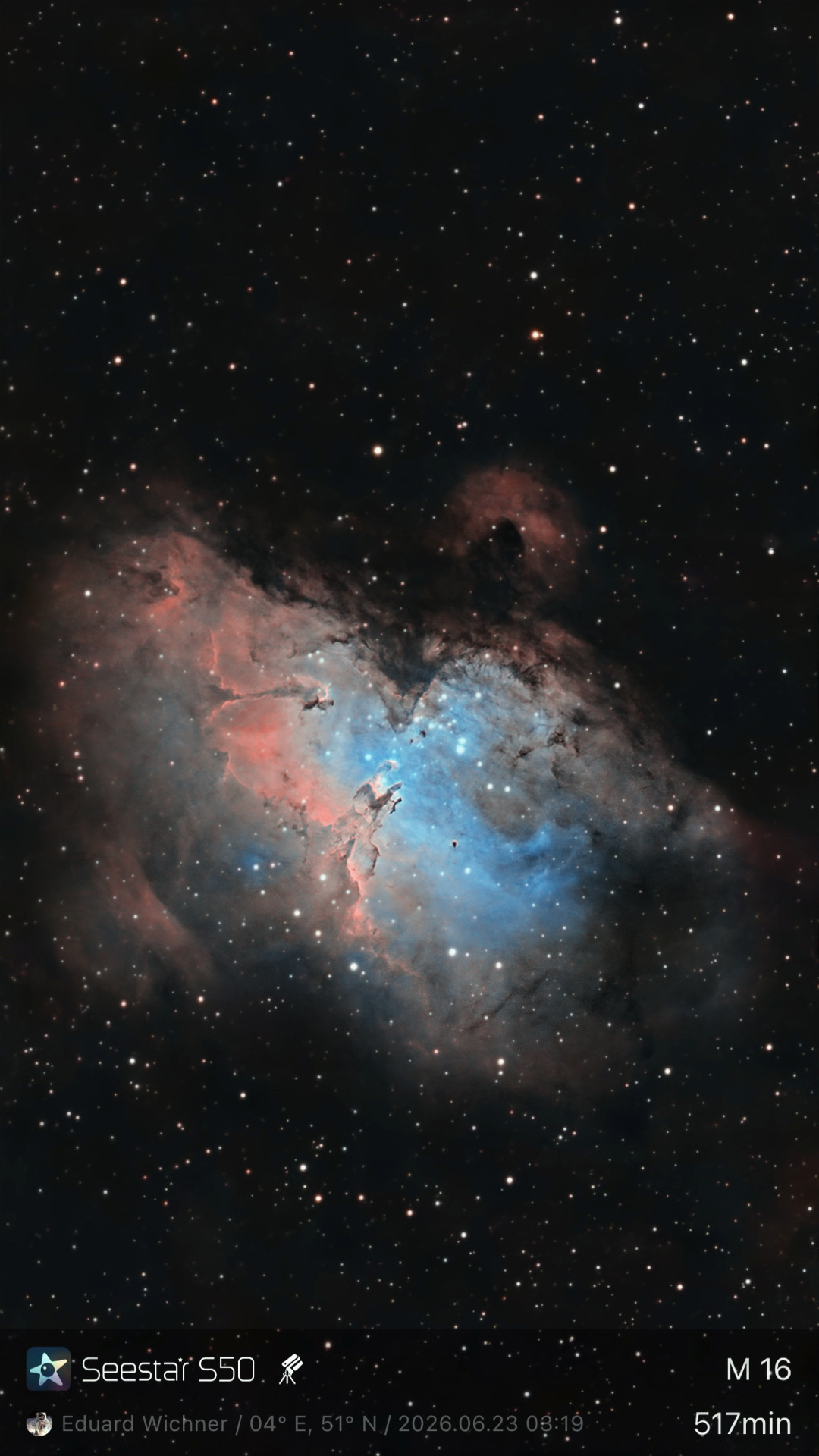
My return to the Eagle Nebula (M16) and its famous Pillars of Creation after nearly eight years. The last time I imaged this remarkable star-forming region was in August 2018 using an 8-inch Sky-Watcher Newtonian and my only astronomy camera at the time—a ZWO ASI224 planetary camera. Revisiting the same target in June 2026 with the Seestar S50 provided a fascinating perspective on how both my equipment and processing workflow have evolved over the years.

This image combines 8 hours and 37 minutes of total integration time (517 minutes) from 1034 individual 30-second exposures collected over two nights. An additional Tri-Band filter (Hα, SII, OIII) was used alongside the Seestar’s built-in light-pollution filter, allowing me to process the data in an SHO Hubble Palette. All frames were extracted and manually stacked in DeepSkyStacker, with final processing completed in Photoshop to refine the color mapping and enhance the delicate structures within the nebula. Located approximately 5,700 light-years away in the constellation Serpens, M16 is a vast stellar nursery where towering columns of gas and dust continue to give birth to new stars. As with several of my recent Seestar projects, I chose to keep the Seestar banner in the final image as a small cosmetic touch, preserving the exact integration time and celebrating the instrument that made this capture possible.

Imaging Details
Telescope/Lens: ZWO Seestar S50 (triplet apochromatic refractor 50/250 f/5)
Camera: Sony IMX462 (ZWO ASI462MC)
Filters: tri-band Hα, OIII, SII
Total Exposure: 8 hours 37 min
Subs: 1034x30s
Stacking Software: DeepSkyStacker
Processing Software: Photoshop
Location: Willebroek, Belgium
Bortle Scale: 6
Astrometry: RA 274.697662 · Dec -13.782662 · FOV 1.45°
27 views

NGC 6992 — The Eastern Veil Nebula

NGC 6992  — The Eastern Veil Nebula

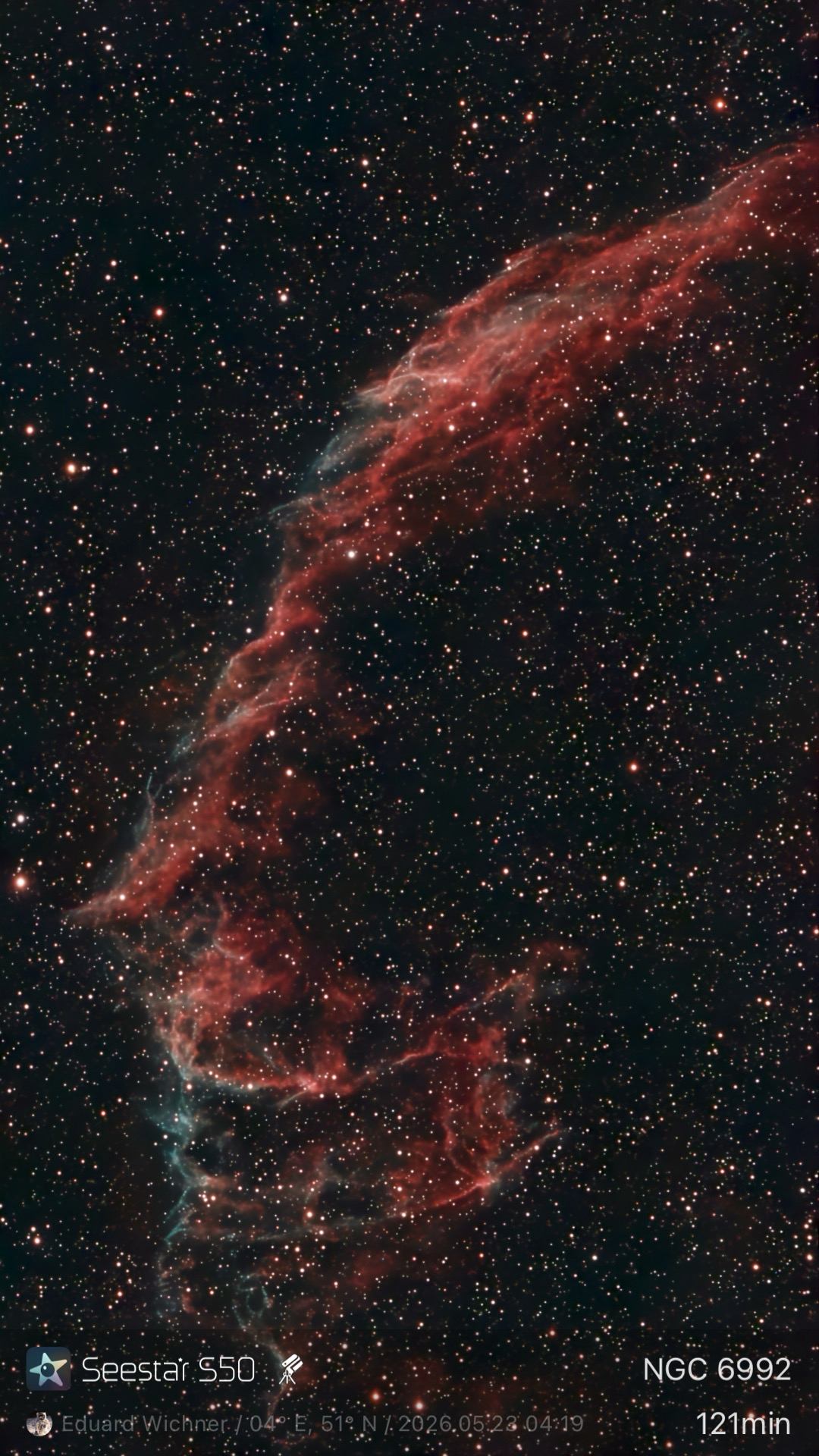
My capture of the Eastern Veil Nebula (NGC 6992) with the Seestar S50, totaling 121 minutes of integration time. Located in the constellation Cygnus, this spectacular tangle of glowing filaments forms part of the Veil Nebula, the expanding remains of a supernova that occurred thousands of years ago. The intricate ribbons of ionized hydrogen and oxygen trace the shockwave as it continues to sweep through interstellar space, creating one of the most detailed and photogenic supernova remnants visible in the night sky.

Imaging Details
Telescope/Lens: ZWO Seestar S50 (triplet apochromatic refractor 50/250 f/5)
Camera: Sony IMX462 (ZWO ASI462MC)
Filters: LPS / IR cut
Total Exposure: 121 minutes
Subs: 242x30s
Location: Rooiland, Willebroek
Bortle Scale: 6
Astrometry: RA 314.119979 · Dec 31.440900 · FOV 1.45°
26 views

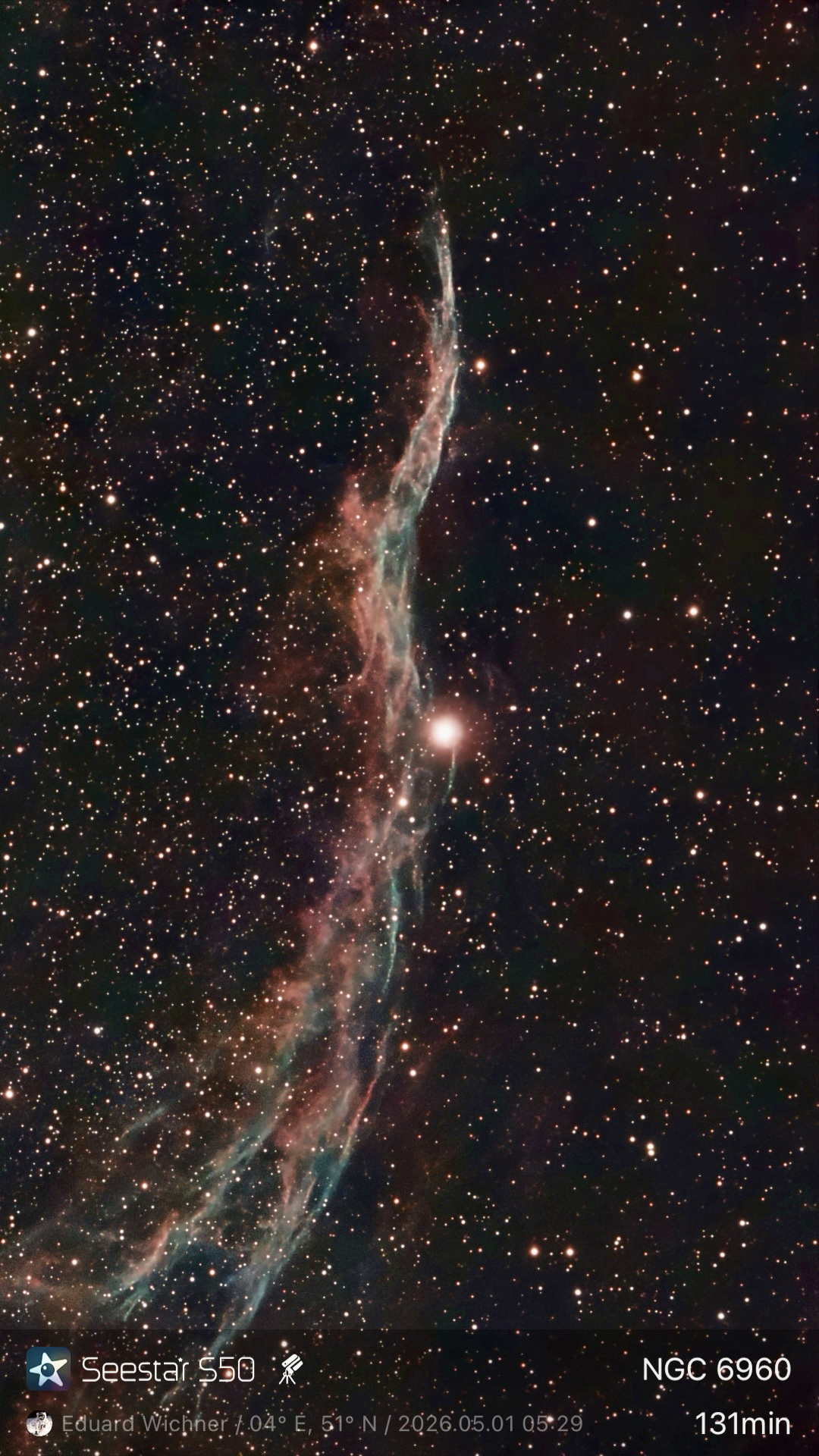
NGC 6960 — The Western Veil Nebula

NGC 6960 — The Western Veil Nebula

My capture of the Western Veil Nebula (NGC 6960) with the Seestar S50, totaling 131 minutes of integration time. Part of the larger Veil Nebula supernova remnant in the constellation Cygnus, this delicate network of glowing filaments marks the expanding shockwave of a massive star that exploded roughly 10,000–20,000 years ago. The bright star 52 Cygni appears embedded within the nebula, adding a striking visual contrast to the intricate structures of ionized gas left behind by this ancient stellar catastrophe.

Imaging Details
Telescope/Lens: ZWO Seestar S50 (triplet apochromatic refractor 50/250 f/5)
Camera: Sony IMX462 (ZWO ASI462MC)
Filters: LPS / IR cut
Total Exposure: 131 minutes
Subs: 262x30s
Location: Willebroek, Belgium
Bortle Scale: 6
Astrometry: RA 311.451074 · Dec 30.723162 · FOV 1.45°
20 views

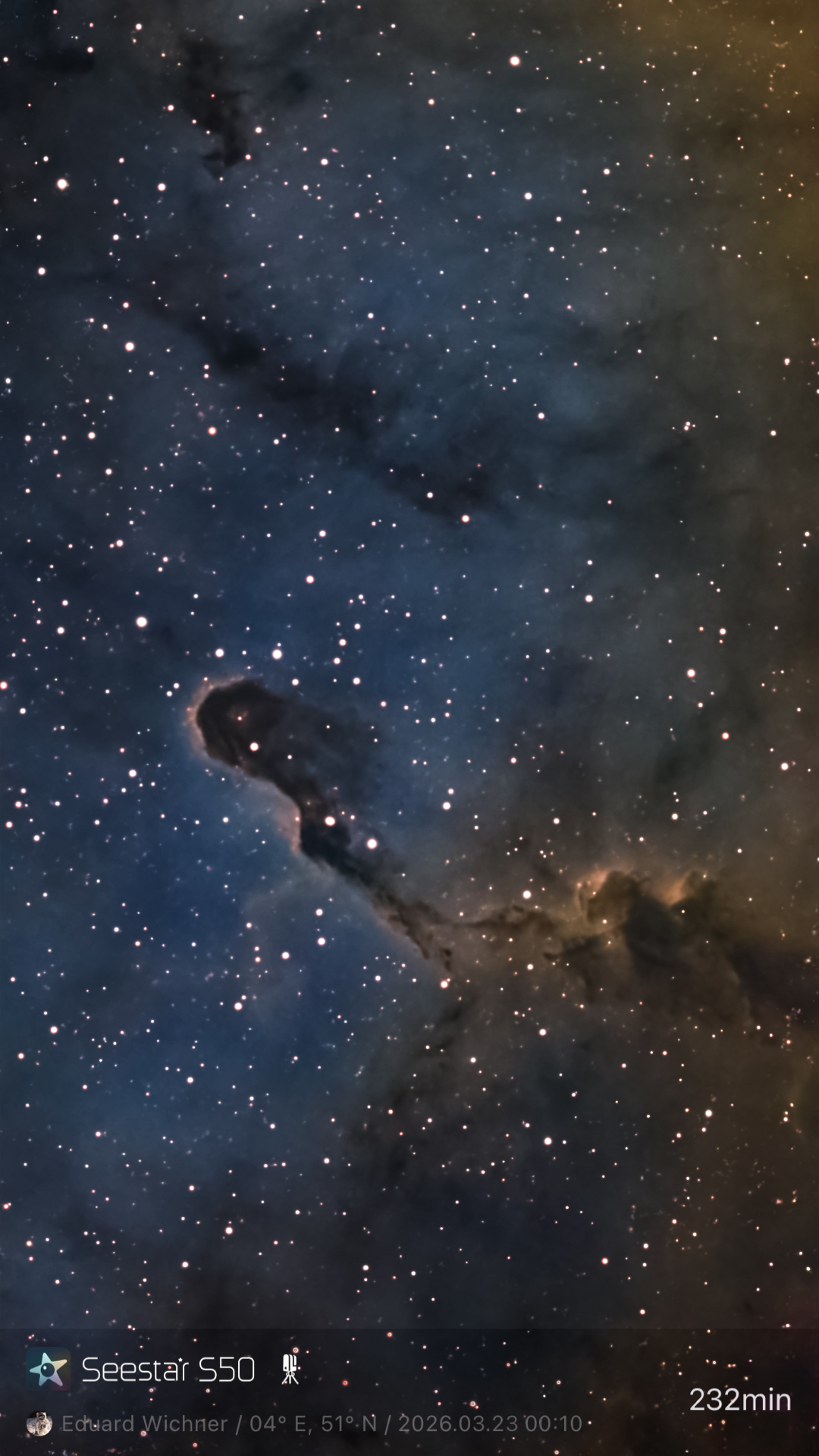
IC 1396A — The Elephant's Trunk Nebula

IC 1396A — The Elephant's Trunk Nebula

My capture of the Elephant's Trunk Nebula (IC 1396A) with the Seestar S50, using an additional Tri-Band filter (Hα, SII, OIII) on top of the built-in LP filter. Located about 2,400 light-years away in the constellation Cepheus, this dense column of gas and dust is a site of active star formation, sculpted by intense radiation and stellar winds from nearby massive stars within the larger IC 1396 emission nebula complex.

With a total integration time of 232 minutes across 1,392 individual 10-second frames, this image represents one of my longest Seestar sessions to date. All raw frames were extracted and stacked manually in DeepSkyStacker, with final processing in Photoshop to remove field rotation artifacts and fine-tune the SHO Hubble Palette mapping, revealing the intricate filamentary structures and the dramatic contrast between the dark trunk and the glowing surrounding nebulosity. I kept the Seestar banner in the final image — a small touch that I think adds character and celebrates the tool that made this capture possible.

Imaging Details
Telescope/Lens: ZWO Seestar S50 (triplet apochromatic refractor 50/250 f/5)
Camera: Sony IMX462 (ZWO ASI462MC)
Filters: tri-band Hα, OIII, SII
Total Exposure: 3 hours 52 minutes
Subs: 1392x10s
Stacking Software: DeepSkyStacker
Processing Software: Photoshop
Location: Willebroek, Belgium
Bortle Scale: 6
Astrometry: RA 323.954508 · Dec 57.572893 · FOV 1.45°
19 views

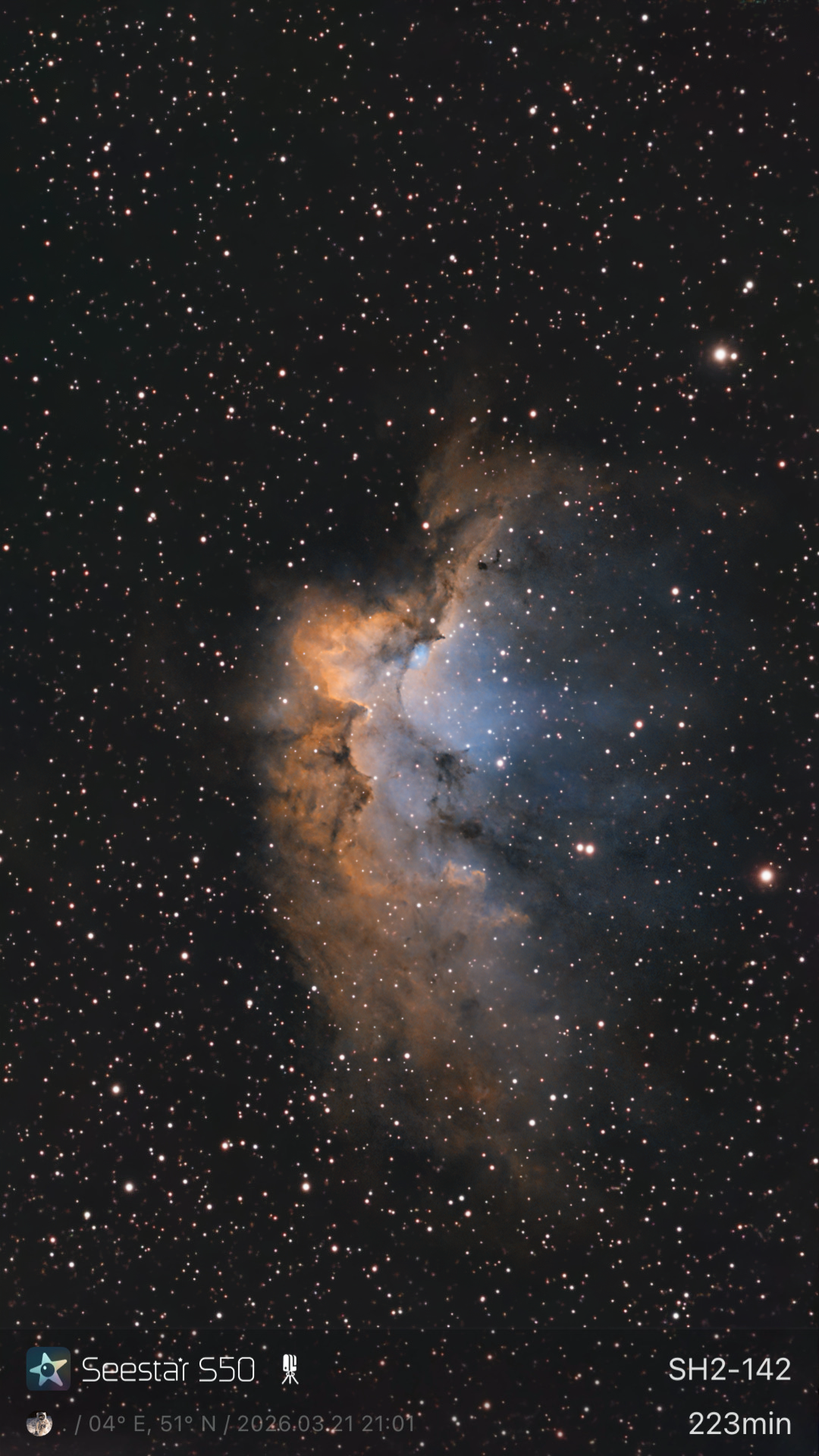
🧙 Wizard Nebula - Seestar S50

🧙 Wizard Nebula - Seestar S50

My first ever capture of the Wizard Nebula (NGC 7380) with the Seestar S50, using an additional Tri-Band filter (Hα, SII, OIII) on top of the built-in LP filter. Located about 7,000 light-years away in Cepheus, this star-forming region creates a dramatic cosmic landscape of glowing gas shaped by stellar winds from the young star cluster NGC 7380.

The Wizard Nebula sits quite low on the horizon from my location, so I captured it across several nights to build up enough integration time. All raw frames from the Seestar were extracted and stacked manually in DeepSkyStacker, with final processing in Photoshop to remove field rotation artifacts and fine-tune the SHO Hubble Palette mapping, revealing the nebula's intricate structures and rich color palette. I kept the Seestar banner in the final image — a small touch that I think adds character and celebrates the tool that made this capture possible.

Imaging Details
Telescope/Lens: ZWO Seestar S50 (triplet apochromatic refractor 50/250 f/5)
Camera: Sony IMX462 (ZWO ASI462MC)
Filters: tri-band Hα, OIII, SII
Total Exposure: 3 hours 43 min
Subs: 1338x10
Stacking Software: DeepSkyStacker
Processing Software: Photoshop
Location: Willebroek, Belgium
Bortle Scale: 6
Astrometry: RA 341.878798 · Dec 58.060724 · FOV 1.45°
24 views

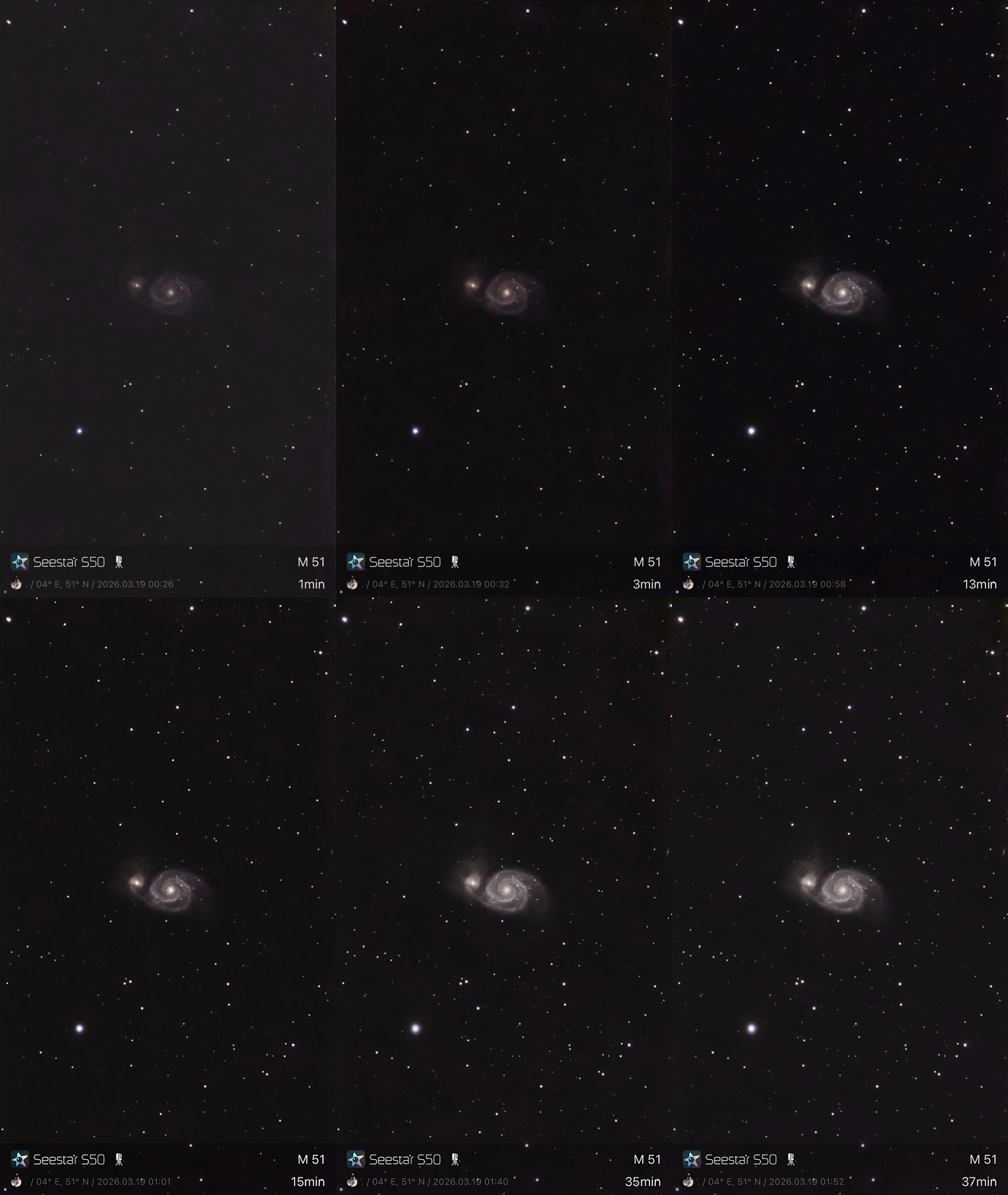
M51 — Integration Progress is easy with the Seestar S50

M51 — Integration Progress is easy with the Seestar S50

A time-lapse gif showing how increasing integration time reveals more detail in the Whirlpool Galaxy (M51), captured with the Seestar S50. Each frame represents a different exposure length, demonstrating how additional photons gradually bring out the faint spiral arms, dust lanes, and the tidal bridge connecting M51 to its companion galaxy NGC 5195. This visual comparison highlights the fundamental principle of astrophotography: more time equals more signal, transforming a faint smudge into a detailed cosmic portrait.

19 views

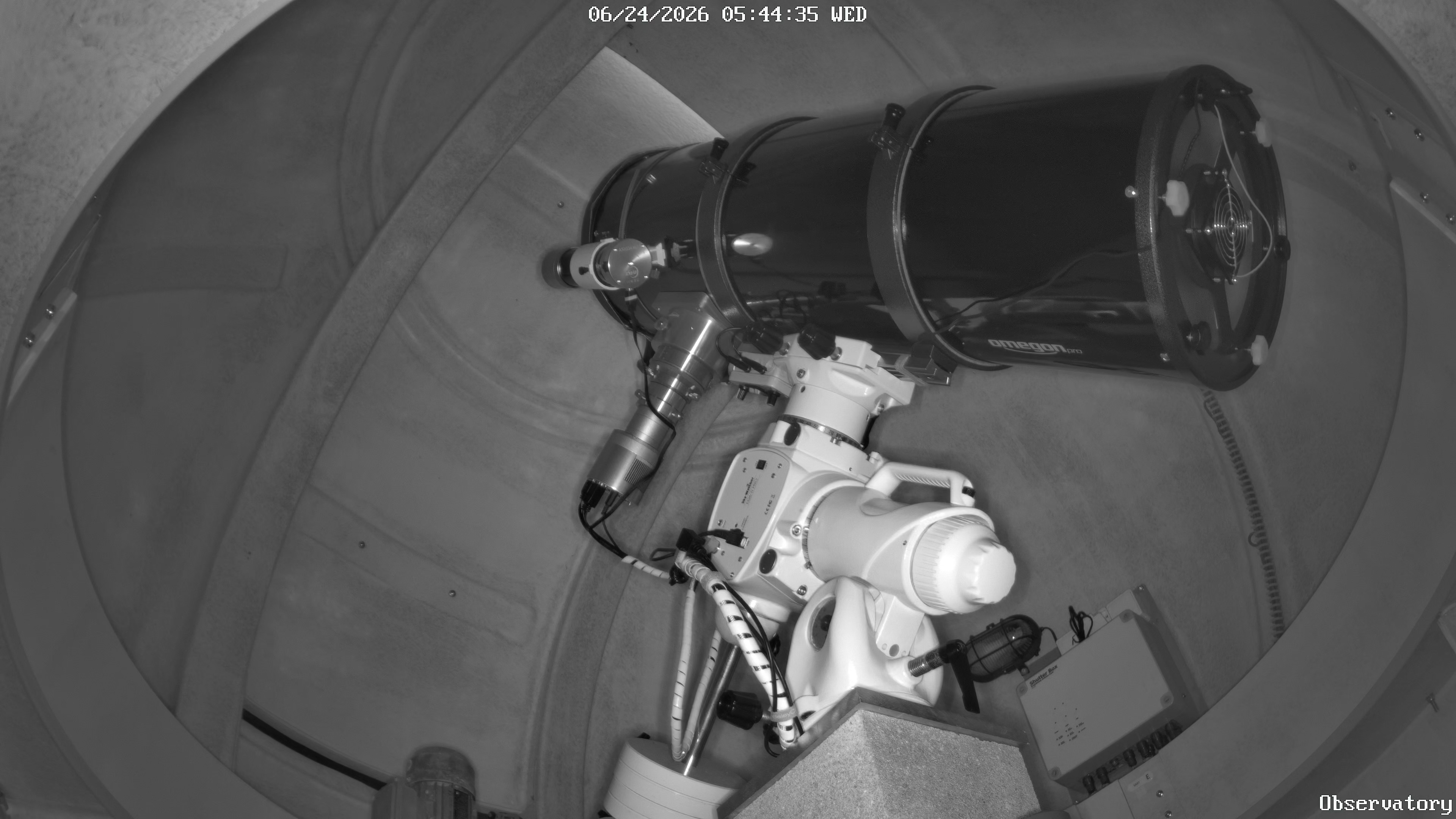
My Permanent Astrophotography Setup

My Permanent Astrophotography Setup

My fully automated and remotely operable observatory setup, centered around an Omegon Pro Astrograph 254/1016 on a Sky-Watcher EQ6-R PRO mount. For deep-sky imaging, I use a cooled ZWO ASI294MC Pro one-shot color camera, while planetary imaging is handled by a ZWO ASI224 paired with a Tele Vue 4× Powermate. The observatory is equipped with a moisture extraction system and winter heating to keep humidity under control year-round, allowing the equipment to remain permanently installed and ready for imaging whenever the skies cooperate.

9 views

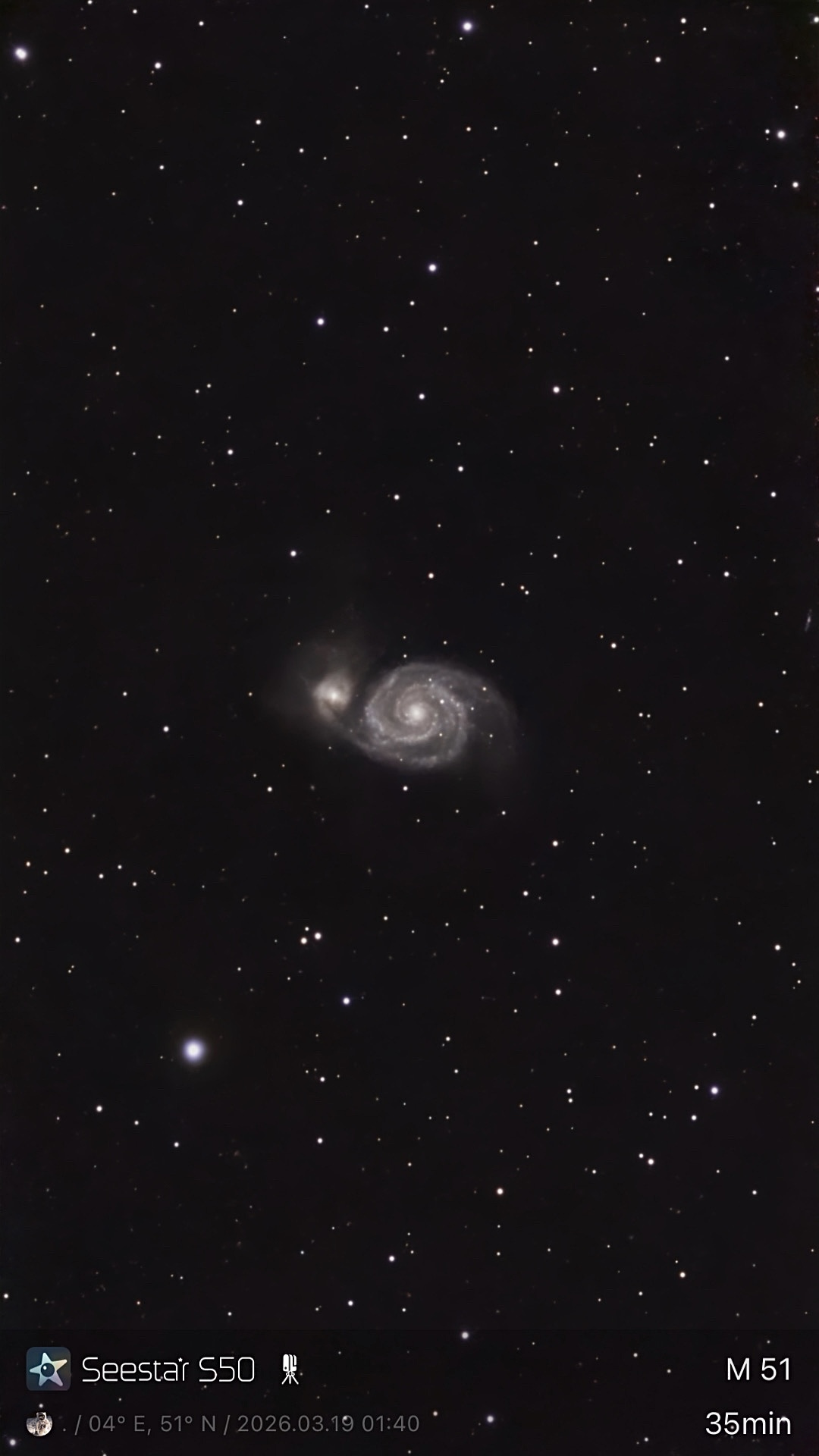
M51 — The Whirlpool Galaxy

M51 — The Whirlpool Galaxy

The Whirlpool Galaxy (M51) captured with the Seestar S50. Located 23 million light-years away in Canes Venatici, this stunning face-on spiral galaxy is gravitationally interacting with its companion NGC 5195, creating the distinctive tidal bridge and dramatic spiral structure.

Imaging Details
Telescope/Lens: ZWO Seestar S50 (triplet apochromatic refractor 50/250 f/5)
Camera: Sony IMX462 (ZWO ASI462MC)
Filters: LPS / IR cut
Total Exposure: 35 min
Subs: 210x10s
Location: Willebroek, Belgium
Bortle Scale: 6
Astrometry: RA 202.490663 · Dec 47.194978 · FOV 1.45°
17 views

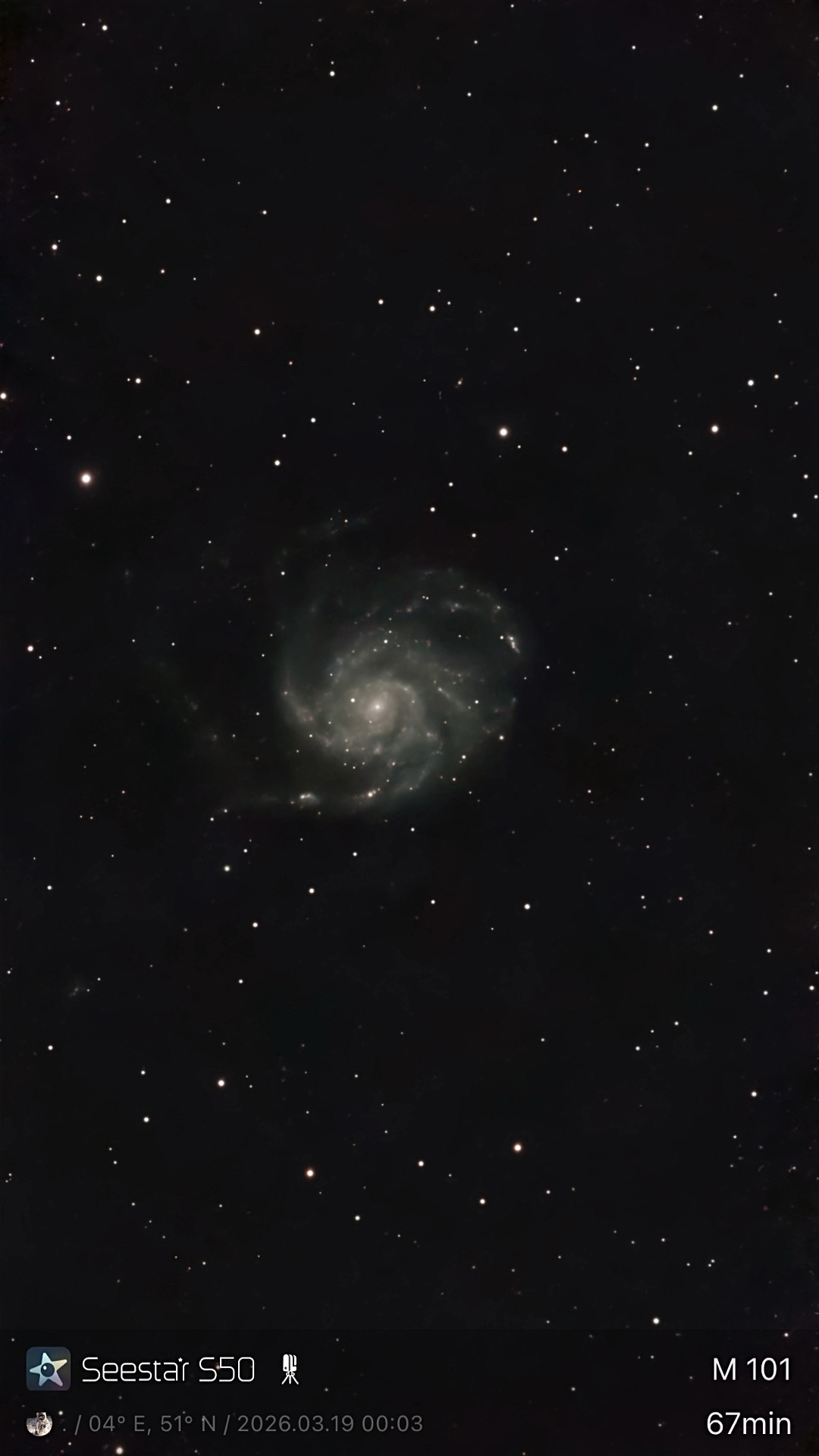
M101 — The Pinwheel Galaxy

M101 — The Pinwheel Galaxy

The Pinwheel Galaxy (M101) captured with the Seestar S50. Located 21 million light-years away in Ursa Major, this grand-design spiral galaxy spans 170,000 light-years across, showcasing its asymmetric spiral arms and bright star-forming regions

Imaging Details
Telescope/Lens: ZWO Seestar S50 (triplet apochromatic refractor 50/250 f/5)
Camera: Sony IMX462 (ZWO ASI462MC)
Filters: LPS / IR cut
Total Exposure: 67 min
Subs: 384x10s
Location: Willebroek, Belgium
Bortle Scale: 6
Astrometry: RA 210.807422 · Dec 54.315576 · FOV 1.45°
12 views

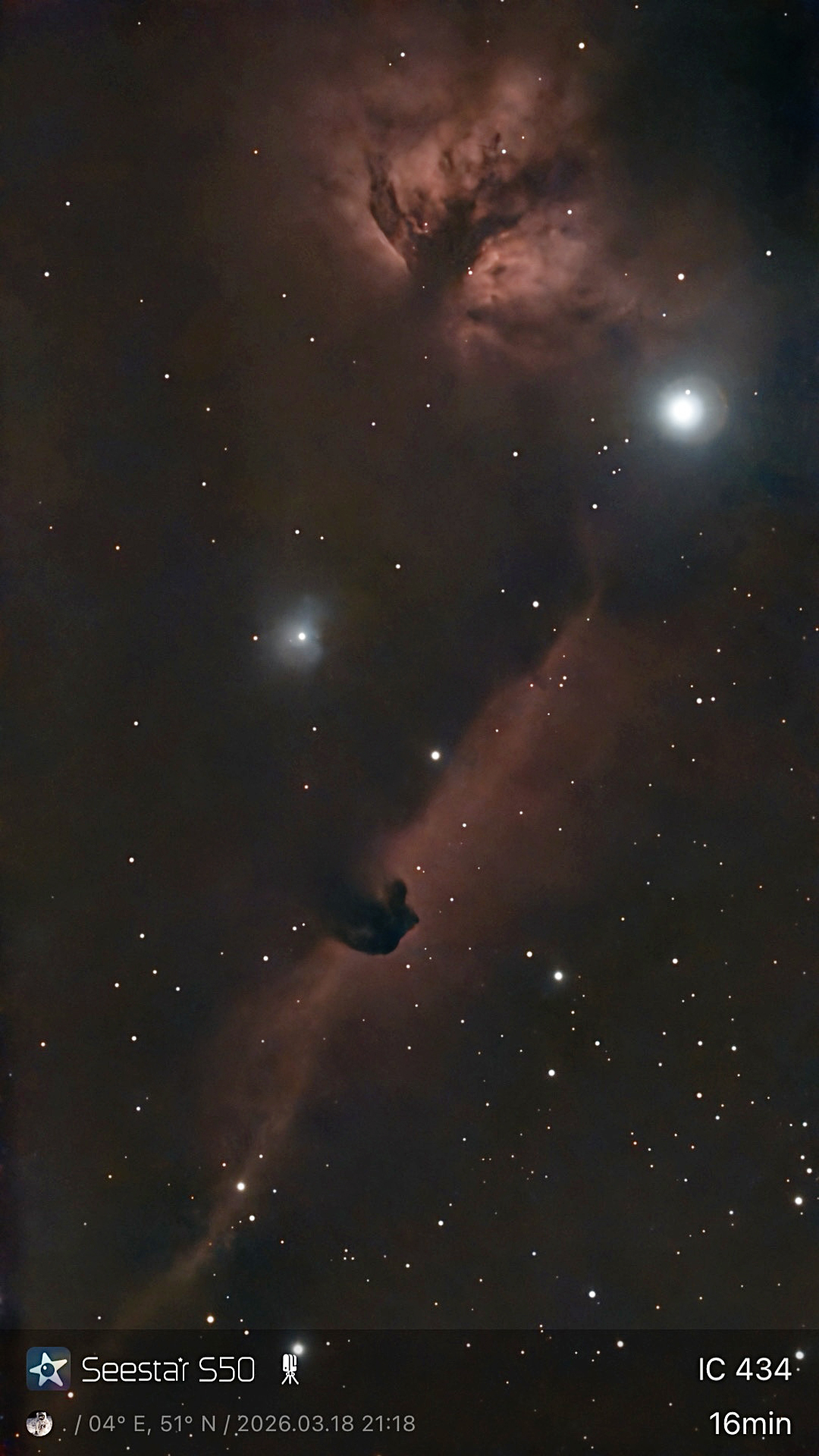
🐴 Horsehead and Flame Nebulas - Seestar S50

🐴 Horsehead and Flame Nebulas - Seestar S50

A 16-minute capture of the iconic Horsehead Nebula (Barnard 33) and the nearby Flame Nebula (NGC 2024) with the Seestar S50. Located in Orion at roughly 1,500 light-years away, the dark silhouette of the Horsehead stands out against the glowing hydrogen emission nebula IC 434, while the Flame Nebula blazes with star formation just next to it. Two of the winter sky's most photogenic deep-sky targets, captured in a single convenient frame.

Imaging Details
Telescope/Lens: ZWO Seestar S50 (triplet apochromatic refractor 50/250 f/5)
Camera: Sony IMX462 (ZWO ASI462MC)
Filters: LPS / IR cut
Total Exposure: 16 min
Subs: 96x10s
Location: Willebroek, Belgium
Bortle Scale: 6
Astrometry: RA 85.291605 · Dec -2.292789 · FOV 1.45°
7 views

☀️ Solar Sunspots - Seestar S50

☀️ Solar Sunspots - Seestar S50

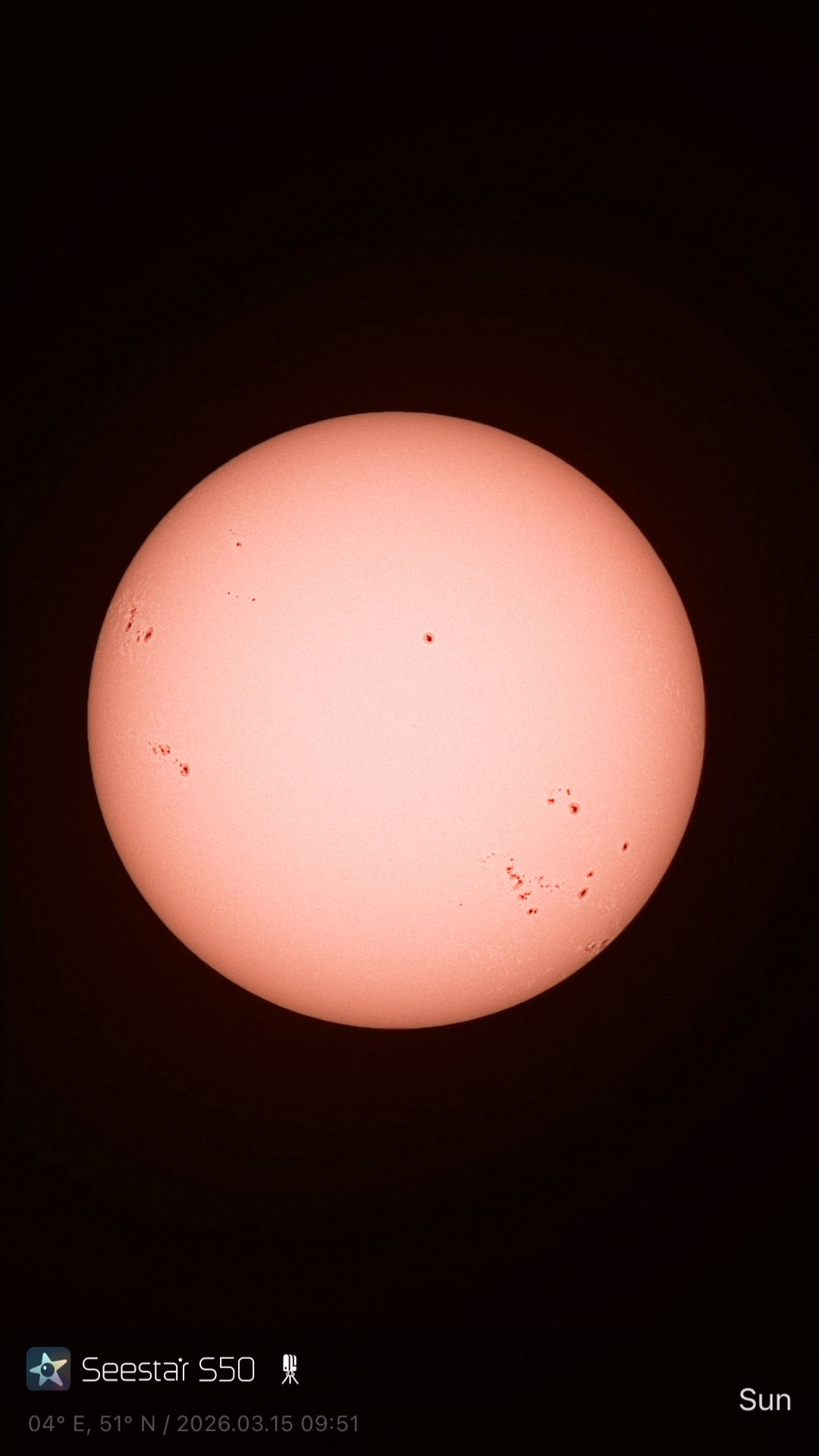
A quick capture of our Sun with the Seestar S50, revealing several active sunspot regions across the solar disk. These dark patches are areas of intense magnetic activity where temperatures drop to around 3,800°C — cooler than the surrounding photosphere at 5,500°C. Each sunspot can be larger than Earth itself, offering a glimpse into the dynamic and ever-changing nature of our nearest star.

Imaging Details
Telescope/Lens: ZWO Seestar S50 (triplet apochromatic refractor 50/250 f/5)
Camera: Sony IMX462 (ZWO ASI462MC)
Filters: solar filter
Location: Willebroek, Belgium
4 views

NGC 2237 — The Rosette Nebula in SHO Palette

NGC 2237 — The Rosette Nebula in SHO Palette

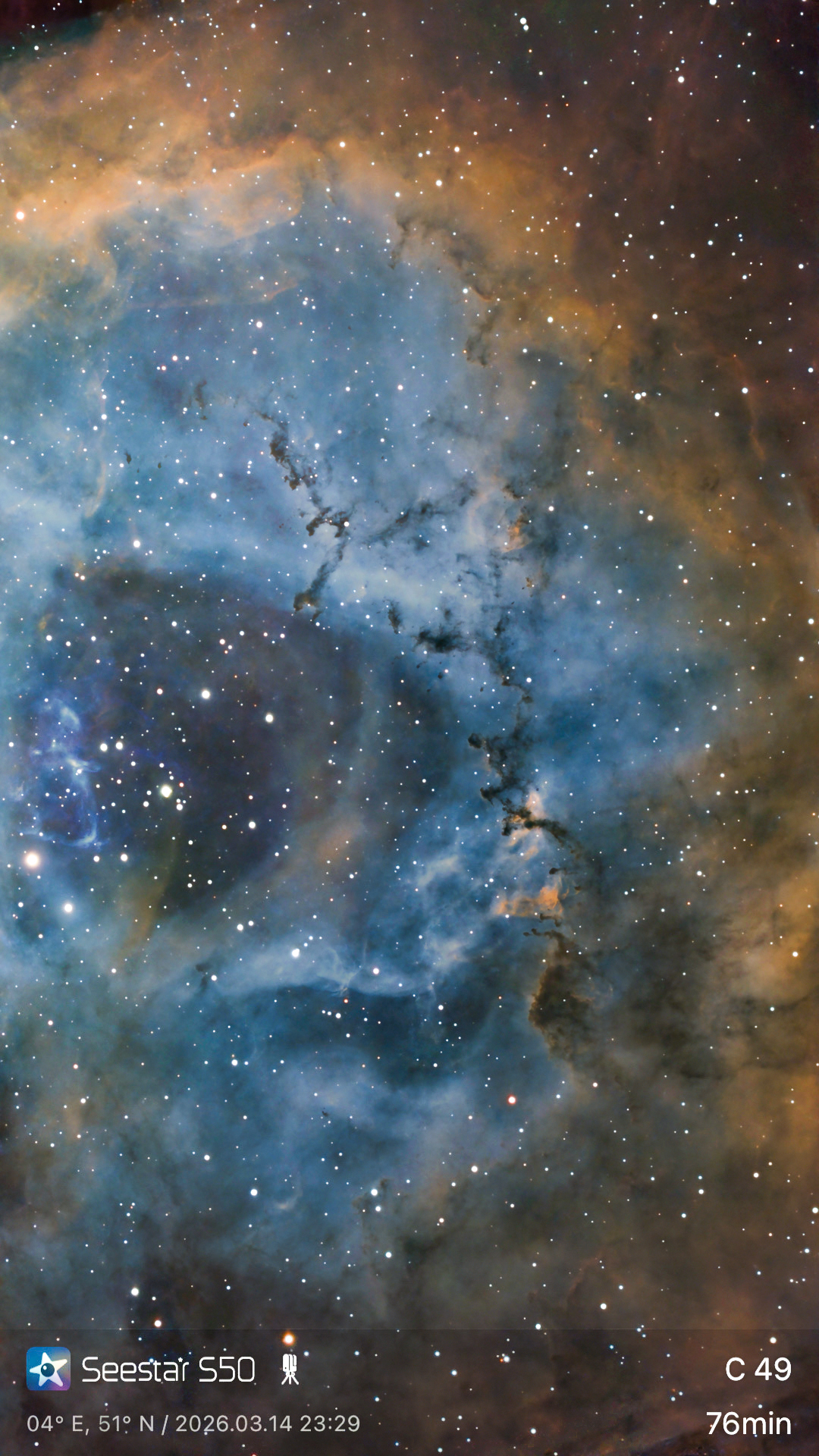
The Rosette Nebula (NGC 2237) captured with the Seestar S50 smart telescope over 76 minutes of integration, using an additional Tri-Band filter (Hα, OIII, SII) to create this SHO Hubble Palette image. Located approximately 5,000 light-years away in the constellation Monoceros, the Rosette is a vast star-forming region spanning roughly 130 light-years across, with a distinctive circular cavity carved out by intense stellar winds from the young, massive stars of the central cluster NGC 2244.

The Hubble Palette (mapping sulfur to red, hydrogen-alpha to green, and oxygen to blue) reveals the intricate filamentary structure of ionized gas and the delicate interplay between emission nebulae and dark dust lanes that give the Rosette its iconic flower-like appearance. 

An interesting artifact visible in the corners of this image is field rotation — due to the Seestar operating in alt-azimuth mode. As the telescope follows the sky's motion without compensating for rotation, the field slowly rotates around the center, causing the corners to accumulate less integrated data and fewer photons hitting the sensor. This creates subtle "gaps" at the edges where the signal is weaker, a common challenge when using alt-az mounts for longer exposures. Despite this limitation, the central region shines with beautiful detail, showcasing the balance between the convenience of a portable smart telescope and the realities of celestial mechanics — a reminder that even imperfect data can reveal cosmic beauty.

Imaging Details
Telescope/Lens: ZWO Seestar S50 (triplet apochromatic refractor 50/250 f/5)
Camera: Sony IMX462 (ZWO ASI462MC)
Filters: tri-band Hα, OIII, SII
Total Exposure: 76 min
Subs: 456x10s
Location: Willebroek, Belgium
Bortle Scale: 6
Astrometry: RA 97.789189 · Dec 5.048812 · FOV 1.45°
7 views

M42 — The Orion Nebula (Seestar S50)

M42 — The Orion Nebula (Seestar S50)

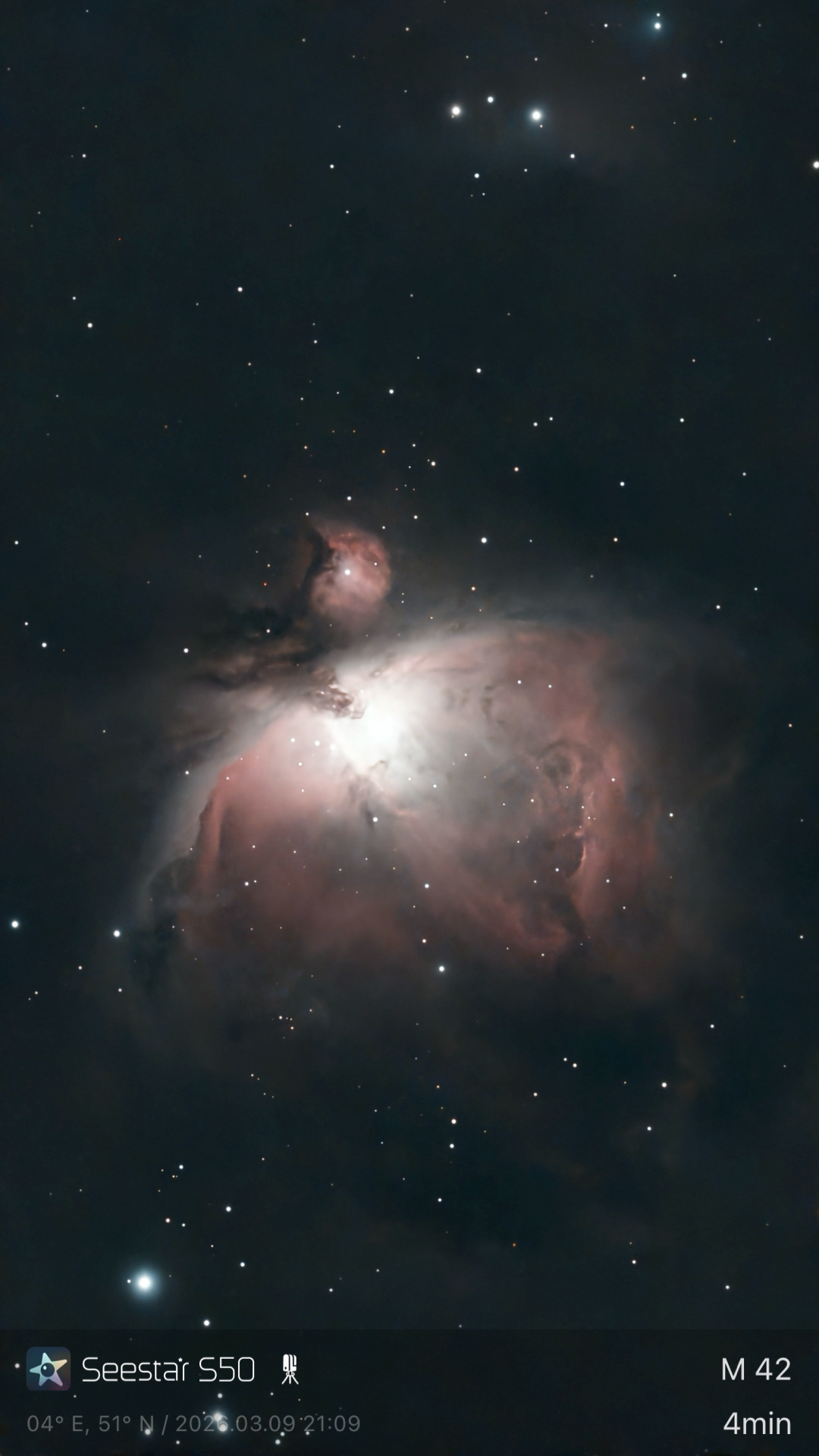
The Great Orion Nebula (M42) — first capture with the ZWO Seestar S50, a smart telescope that opens up astrophotography to a whole new dimension of people by making it incredibly easy and accessible. This image was actually captured by my 8-year-old daughter, who operated the Seestar with just a few taps on a smartphone. Located about 1,350 light-years away in the constellation Orion, M42 is one of the brightest nebulae visible to the naked eye and a stellar nursery where new stars are being born. The Seestar's automated tracking, stacking, and processing brought out the glowing hydrogen gas and intricate dust lanes surrounding the Trapezium cluster at the nebula's heart — proving that cutting-edge astrophotography is now truly within everyone's reach.

Imaging Details
Telescope/Lens: ZWO Seestar S50 (triplet apochromatic refractor 50/250 f/5)
Camera: Sony IMX462 (ZWO ASI462MC)
Filters: LPS / IR cut
Total Exposure: 4 min
Subs: 24x10s
Location: Willebroek, Belgium
Bortle Scale: 6
Astrometry: RA 83.787350 · Dec -5.379974 · FOV 1.45°
3 views

NGC 281 — The Pacman Nebula in SHO Hubble Palette

NGC 281 — The Pacman Nebula in SHO Hubble Palette

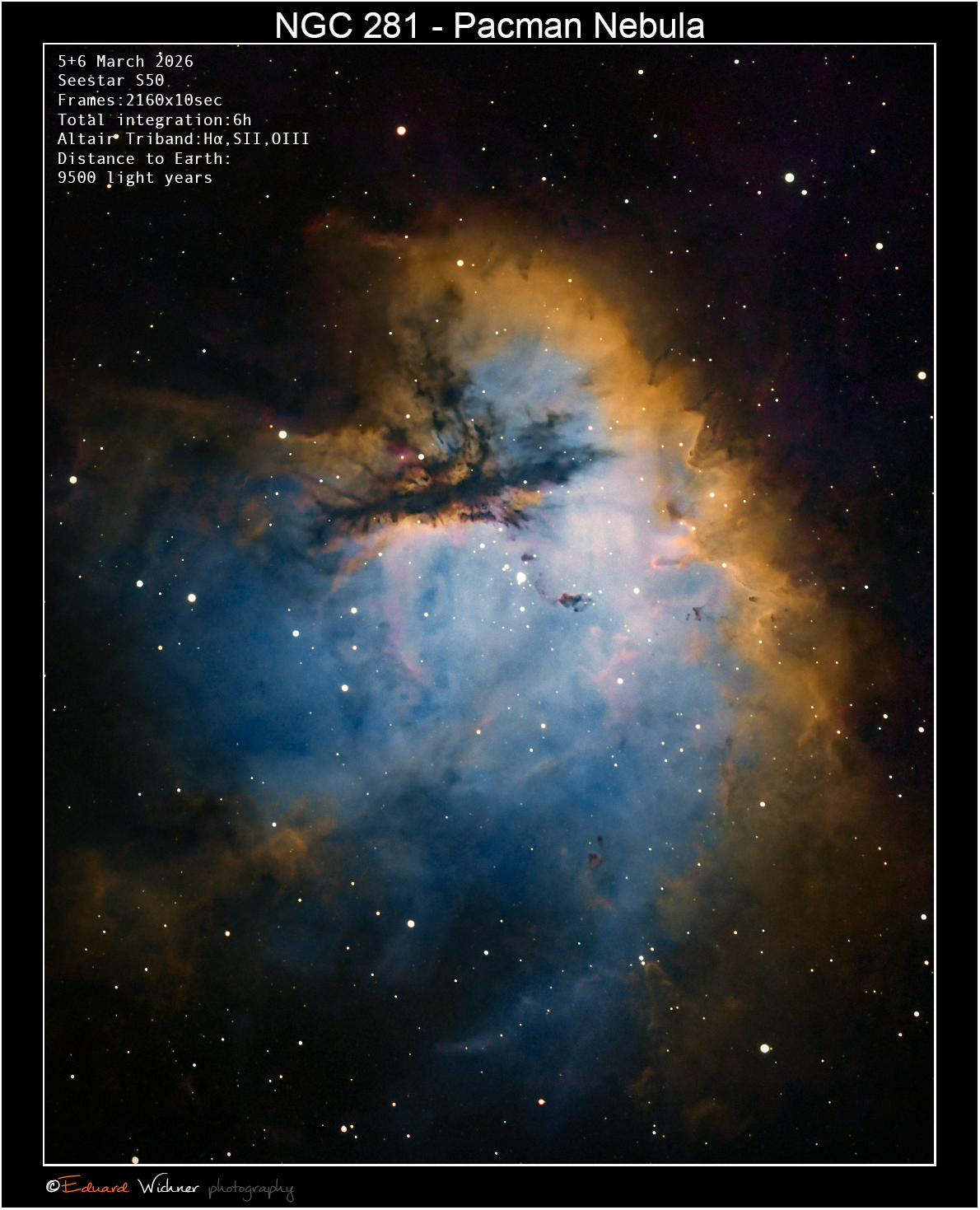
The Pacman Nebula (NGC 281) captured with the Seestar S50 smart telescope over 6 hours of integration, using an additional Tri-Band filter (Hα, OIII, SII) to create this stunning SHO Hubble Palette rendition. Inspired by Cuiv, The Lazy Geek's approach to pushing the limits of compact smart telescopes, this image demonstrates how accessible deep-sky astrophotography has become — allowing long integrations and advanced narrowband imaging with minimal setup.

Located about 9,500 light-years away in the constellation Cassiopeia, NGC 281 is an active star-forming region filled with glowing hydrogen gas, dark dust lanes, and brilliant young stars. The nebula's distinctive "Pacman" shape is created by a cavity carved out by stellar winds and radiation from hot, massive stars within the central cluster IC 1590. The Hubble Palette (mapping sulfur to red, hydrogen-alpha to green, and oxygen to blue) reveals intricate structures and layers of ionized gas, showcasing the complex interplay between newborn stars and the surrounding nebula.

Rather than relying on the Seestar's built-in stacking, I extracted each individual frame and processed them manually — stacking in DeepSkyStacker for full control over calibration and alignment, then performing the final processing in Photoshop to bring out the delicate narrowband details and color balance. This hybrid workflow combines the convenience of a smart telescope with the precision of traditional astrophotography processing, proving that with patience, the right filters, and a bit of inspiration from the community, even a portable setup can capture breathtaking cosmic wonders. Six hours under the stars, one frame at a time — astrophotography made simple, but no less spectacular.

Imaging Details
Telescope/Lens: ZWO Seestar S50 (triplet apochromatic refractor 50/250 f/5)
Camera: Sony IMX462 (ZWO ASI462MC)
Filters: tri-band Hα, OIII, SII
Total Exposure: 6 hours
Subs: 2160x10s
Stacking Software: DeepSkyStacker
Processing Software: Photoshop
Location: Willebroek, Belgium
Bortle Scale: 6
Astrometry: RA 13.157204 · Dec 56.648088 · FOV 1.25°
4 views

The Seestar S50 in Its Natural Habitat

The Seestar S50 in Its Natural Habitat

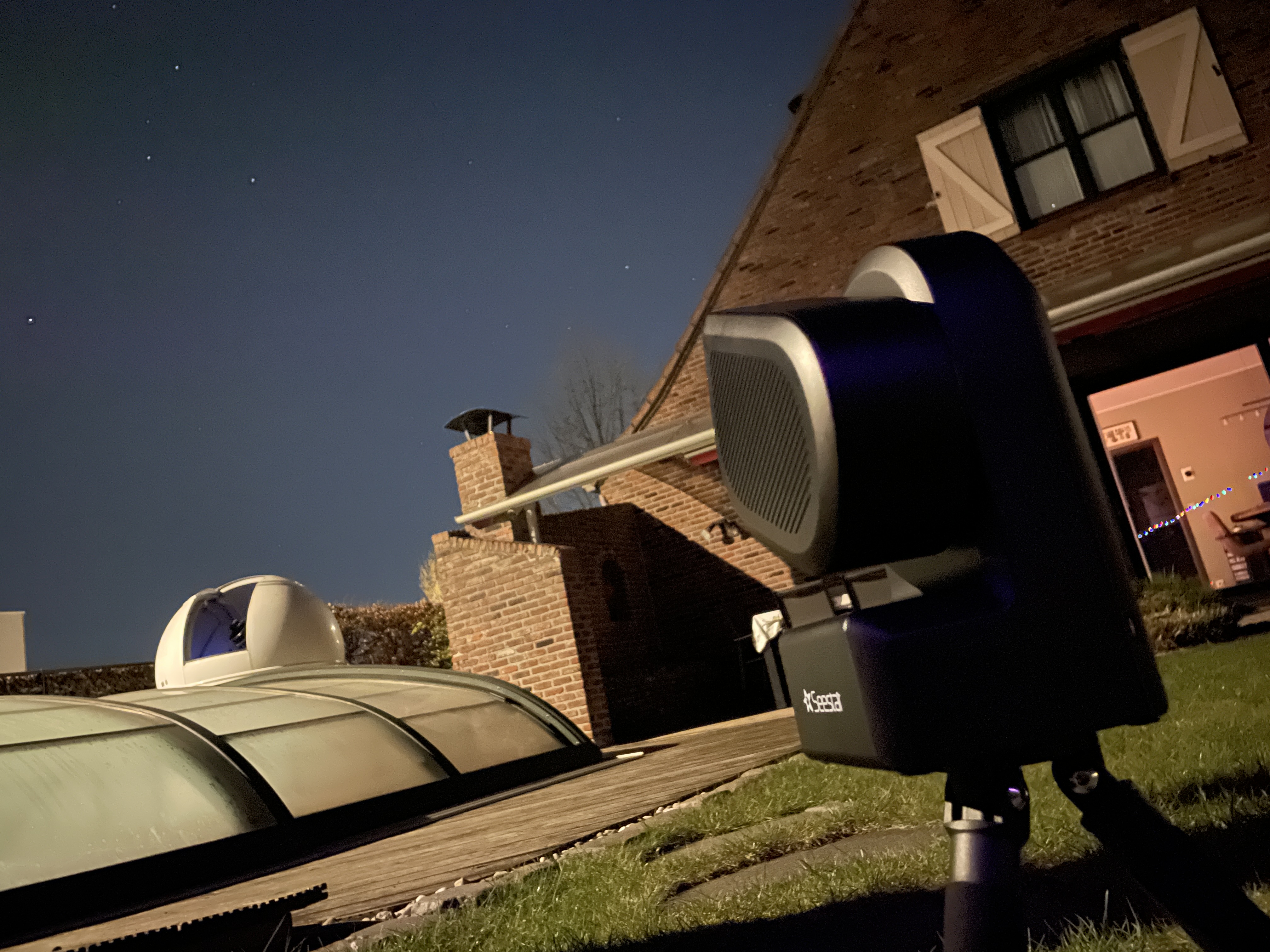
My Seestar S50 during an imaging session in the backyard, with my observatory visible in the background.

4 views

Jupiter — Post-Opposition Detail from Belgium

Jupiter — Post-Opposition Detail from Belgium

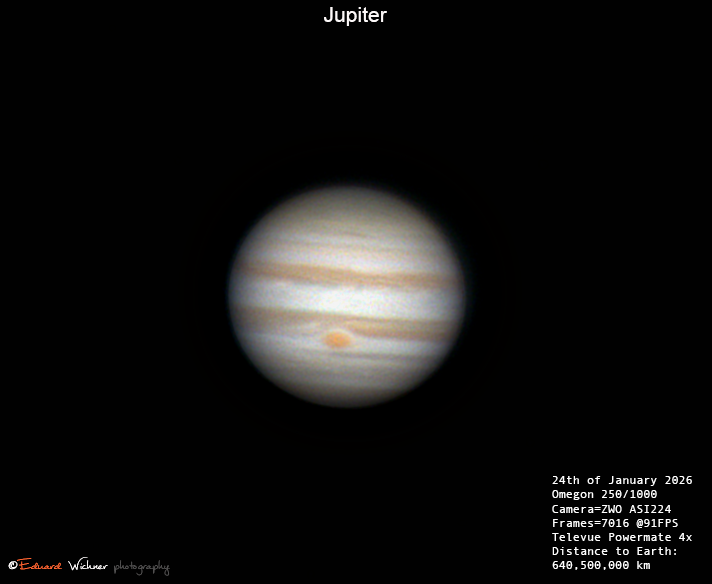
Captured on January 24th, 2026, two weeks after opposition, this image of Jupiter showcases remarkable atmospheric detail despite challenging Belgian weather conditions. The setup combines a 10-inch Omegon astrograph with a TeleVue Powermate 4x barlow and ZWO ASI224 camera, demonstrating the power of planetary imaging even when opposition timing isn't perfect.

The Great Red Spot is prominently visible in the southern hemisphere, along with Jupiter's characteristic cloud bands and turbulent atmospheric features. The image captures the gas giant at a distance of 640.5 million kilometers, revealing the intricate belt structure and subtle color variations that make Jupiter endlessly fascinating to observe.

Opposition may offer the closest approach and best seeing conditions, but this image proves that patience and favorable atmospheric conditions can yield exceptional results even weeks later. For astrophotographers in regions with unpredictable weather like Belgium, seizing clear nights when they appear is often more valuable than waiting for theoretical "perfect" timing—a lesson every deep-sky and planetary imager learns well.

Imaging Details
Telescope/Lens: Omegon Astrograph 254/10"
Camera: ZWO ASI224 + Televue Powermate 2" 4x
Mount: EQ6-R PRO
Filters: Omegon Pro 2'' CLS
Subs: 7016
Gain/ISO: 284
Stacking Software: AstroSurface
Processing Software: Photoshop
Location: Willebroek, Belgium
Bortle Scale: 6
10 views

Jupiter — Post-Opposition Detail from Belgium

Jupiter — Post-Opposition Detail from Belgium

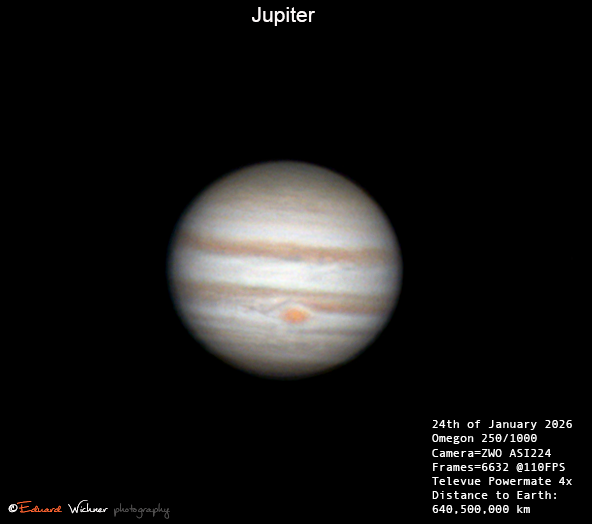
Captured later during the same observing session on January 24th, 2026, this image shows Jupiter's rapid rotation in action. The gas giant completes a full rotation in just under 10 hours, meaning atmospheric features and the Great Red Spot shift noticeably even within a single night of imaging. This second capture demonstrates how planetary imaging rewards persistence—multiple sequences throughout the night reveal different longitudes and allow selection of the best seeing conditions. Even from Belgium's often challenging skies, patient observers can capture the dynamic nature of our solar system's largest planet.

Imaging Details
Telescope/Lens: Omegon Astrograph 254/10"
Camera: ZWO ASI224 + Televue Powermate 2" 4x
Mount: EQ6-R PRO
Filters: Omegon Pro 2'' CLS
Subs: 6632
Gain/ISO: 320
Stacking Software: AstroSurface
Processing Software: Photoshop
Location: Willebroek, Belgium
Bortle Scale: 6
9 views

Jupiter behind the Scenes — From Video to Final Image

This footage shows the raw planetary video sequence straight from the camera, followed by the final stacked result. Planetary imaging captures thousands of rapidly recorded frames, then specialized software analyzes and stacks only the sharpest moments when atmospheric turbulence briefly steadies. The transformation from jittery, soft video to crisp final image demonstrates why high frame rates and careful frame selection are essential for revealing Jupiter's atmospheric detail—turning fleeting moments of good seeing into a single sharp photograph.

7 views

Behind the Scenes — Jupiter Live in FireCapture

A live view of Jupiter directly from the ZWO ASI224 camera in FireCapture, showing the raw planetary feed as it streams from the telescope. This behind-the-scenes capture reveals the real-time imaging process for high-resolution planetary work—monitoring atmospheric turbulence, fine-tuning focus, and selecting the best moments of steady seeing to record thousands of frames. Unlike deep-sky imaging with long exposures, planetary photography relies on capturing rapid video sequences, then stacking only the sharpest frames to overcome atmospheric distortion and reveal fine detail on the gas giant's surface.

10 views